Motivating Questions
- What do we mean by the limit of a function of two variables at a point
- What techniques can we use to show that a function of two variables does not have a limit at a point
- What does it mean for a function of two variables to be continuous at a point
In this section, we will study limits of functions of several variables, with a focus on limits of functions of two variables. In single variable calculus, we studied the notion of limit, which turned out to be a critical concept that formed the basis for the derivative and the definite integral. In this section we will begin to understand how the concept of limit for functions of two variables is similar to what we encountered for functions of a single variable. The limit will again be the fundamental idea in multivariable calculus, and we will use this notion of the limit of a function of several variables to define the important concept of differentiability later in this chapter. We have already seen its use in the derivatives of vector-valued functions in Section 9.7.
Let's begin by reviewing what we mean by the limit of a function of one variable. We say that a function has a limit as approaches provided that we can make the values as close to as we like by taking sufficiently close (but not equal) to We denote this behavior by writing
Preview Activity
We investigate the limits of several different functions by working with tables and graphs.
- Consider the function defined by
Complete Table .
Table . Values of
What does the table suggest regarding
- Explain how your results in (a) are reflected in Figure .
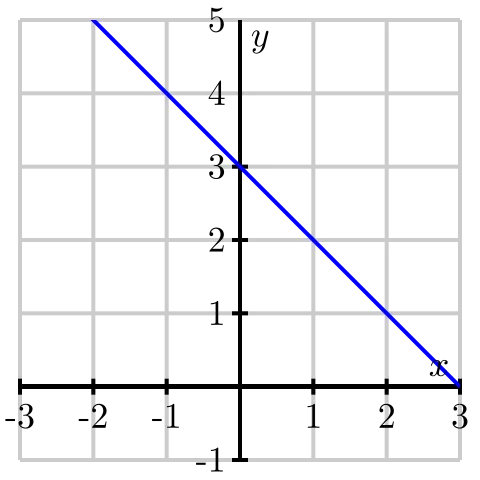
-
Figure . The graph of - Next, consider
Complete Table with values near the point at which is not defined.
Table . Values of
What does this suggest about - Explain how your results in (c) are reflected in Figure .
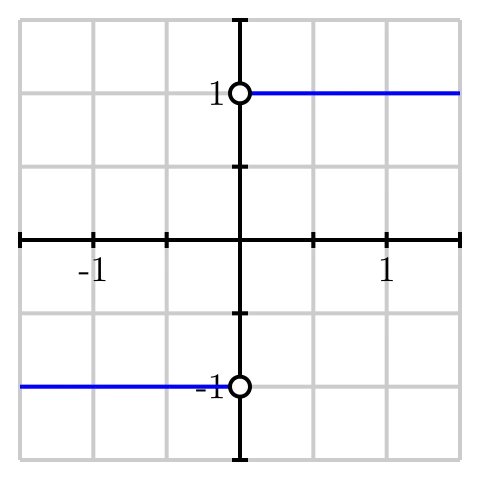
-
Figure . The graph of - Now, let's examine a function of two variables. Let
Complete Table .
Table . Values of
What does the table suggest about - Explain how your results in (e) are reflected in Figure . Compare this limit to the limit in part (a). How are the limits similar and how are they different?
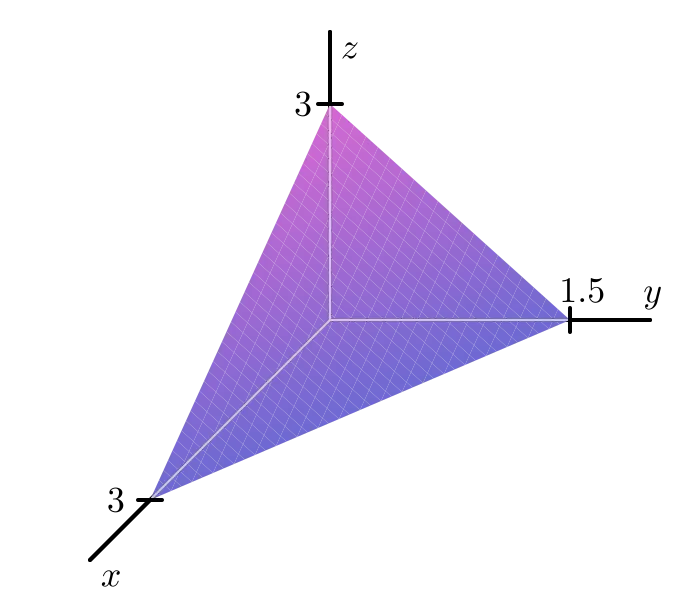
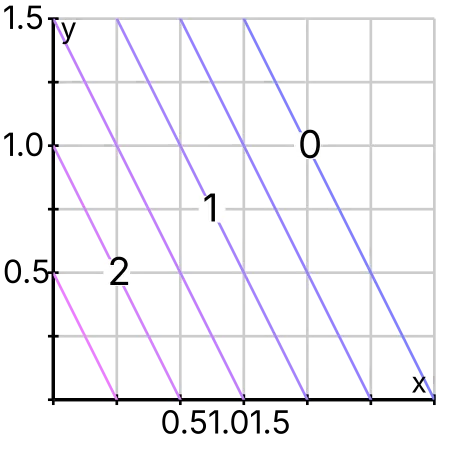
-
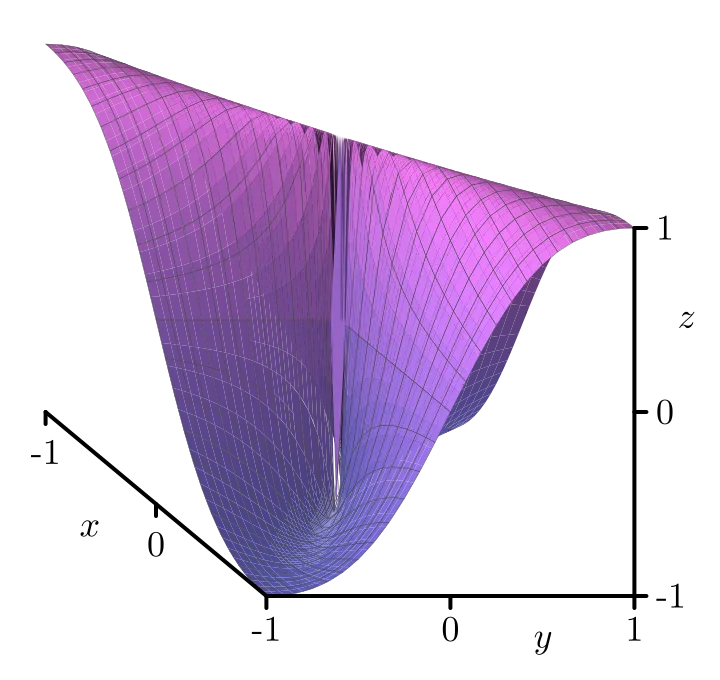
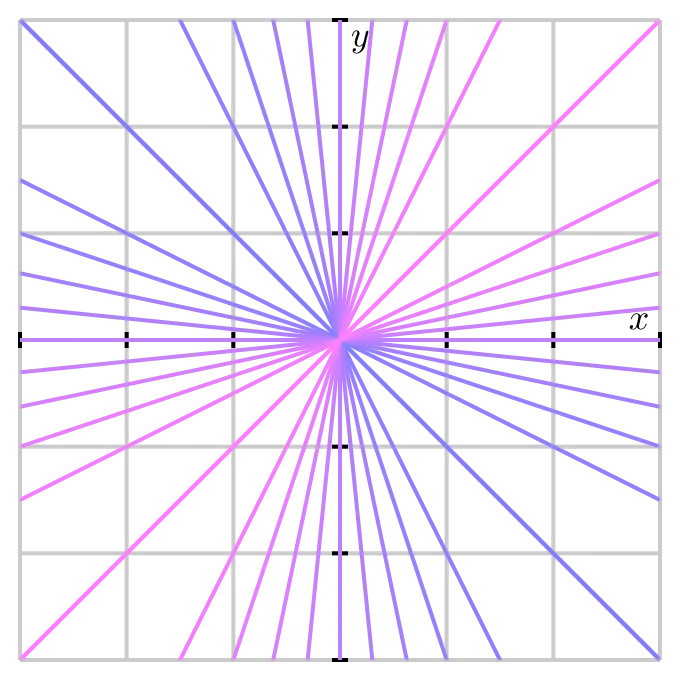
Figure . Left: The graph of Right: A contour plot. - Finally, consider
which is not defined at Complete Table . Round to three decimal places.
Table . Values of
What does this suggest about— - Explain how your results are reflected in Figure . Compare this limit to the limit in part (c). How are the results similar and how are they different?
-
Figure . Left: The graph of Right: A contour plot.
Limits of Functions of Two Variables
In Preview Activity , we recalled the notion of limit from single variable calculus and saw that a similar concept applies to functions of two variables. Though we will focus on functions of two variables, for the sake of discussion, all the ideas we establish here are valid for functions of any number of variables. In a natural followup to our work in Preview Activity , we now formally define what it means for a function of two variables to have a limit at a point.
Definition
Given a function we say that has limit as approaches provided that we can make as close to as we like by taking sufficiently close (but not equal) to We write
To investigate the limit of a single variable function, we often consider the behavior of as approaches from the right and from the left. Similarly, we may investigate limits of two-variable functions, by considering the behavior of as approaches from various directions. This situation is more complicated because there are infinitely many ways in which may approach In the next activity, we see how it is important to consider a variety of those paths in investigating whether or not a limit exists.
Activity
Consider the function defined by
whose graph is shown below in Figure
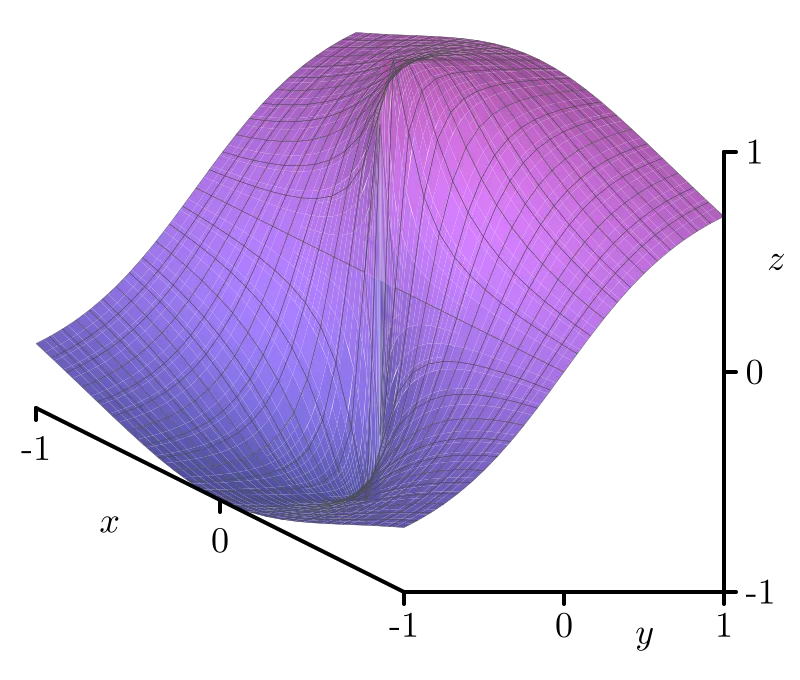
- Is defined at the point What, if anything, does this say about whether has a limit at the point
- Values of (to three decimal places) at several points close to are shown in Table .
Table . Values of a function
Based on these calculations, state whether has a limit at and give an argument supporting your statement. (Hint: The blank spaces in the table are there to help you see the patterns.)— — — — — — — — — - Now we formalize the conjecture from the previous part by considering what happens if we restrict our attention to different paths. First, we look at for points in the domain along the -axis; that is, we consider what happens when What is the behavior of as If we approach by moving along the -axis, what value do we find as the limit?
- What is the behavior of along the line when that is, what is the value of when If we approach by moving along the line in the first quadrant (thus considering as ), what value do we find as the limit?
- In general, if then approaches as approaches regardless of the path we take in letting Explain what the last two parts of this activity imply about the existence of
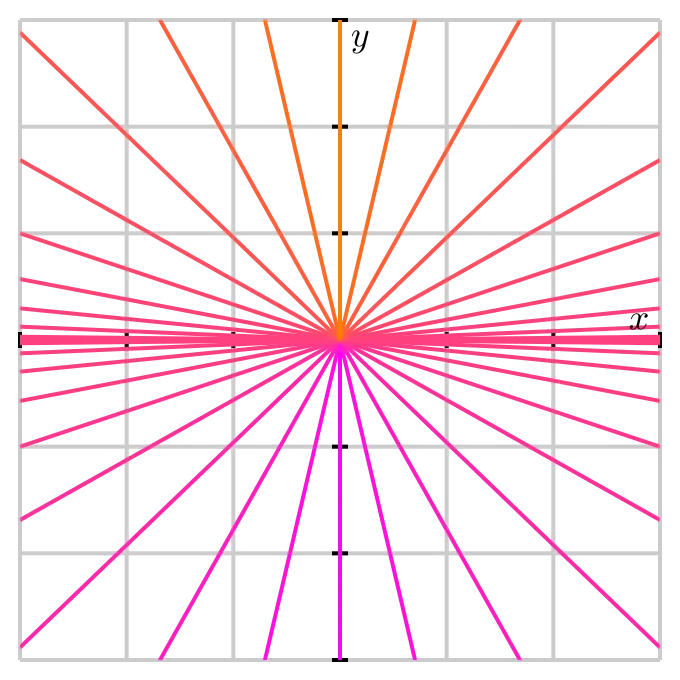
- Shown below in Figure is a set of contour lines of the function What is the behavior of as approaches along any straight line? How does this observation reinforce your conclusion about the existence of from the previous part of this activity? (Hint: Use the fact that a non-vertical line has equation for some constant )
-
Figure . Contour lines of
As we have seen in Activity , if approaches along two different paths and we find that has two different limits, we can conclude that does not exist. This is similar to the one-variable example as shown in Figure ; does not exist because we see different limits as approaches 0 from the left and the right.
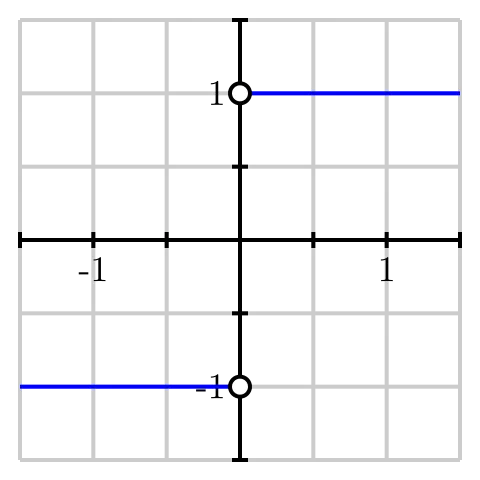
As a general rule, we have
Limits along different paths
If has two different limits as approaches along two different paths, then does not exist.
As the next activity shows, studying the limit of a two-variable function by considering the behavior of along various paths can require subtle insights.
Activity
Let's consider the function defined by
and investigate the limit
- What is the behavior of on the -axis? That is, what is and what is the limit of as approaches along the -axis?
- What is the behavior of on the -axis? That is, what is and what is the limit of as approaches along the -axis?
- What is the behavior of on the line That is, what is and what is the limit of as approaches along the line
- Based on what you have seen so far, do you think exists? If so, what do you think its value is?
- Now consider the behavior of on the parabola What is and what is the limit of as approaches along this parabola?
- State whether the limit exists or not and provide a justification of your statement.
This activity shows that we need to be careful when studying the limit of a two-variable functions by considering its behavior along different paths. If we find two different paths that result in two different limits, then we may conclude that the limit does not exist. However, we can never conclude that the limit of a function exists only by considering its behavior along different paths.
Generally speaking, concluding that a limit exists requires a more careful argument.
Example
Consider the function defined by
We want to know whether exists.
Note that if either or is 0, then Therefore, if has a limit at it must be 0. We will therefore argue that
by showing that we can make as close to as we wish by taking sufficiently close (but not equal) to In what follows, we view and as being real numbers that are close, but not equal, to 0.
Since we have
which implies that
Multiplying both sides by and observing that for all gives
Thus, Since as we can make as close to as we like by taking sufficiently close to (for this example, it turns out that we don't even need to worry about making close to 0). Therefore,
In spite of the fact that these two most recent examples illustrate some of the complications that arise when studying limits of two-variable functions, many of the properties that are familiar from our study of single variable functions hold in precisely the same way.
Properties of Limits
Let and be functions so that and both exist. Then
- and
- for any scalar
- if
We can use these properties and results from single variable calculus to verify that many limits exist. For example, these properties show that the function defined by
has a limit at every point and, moreover,
The reason for this is that polynomial functions of a single variable have limits at every point.
Continuity
Recall that a function of a single variable is said to be continuous at provided that the following three conditions are satisfied:
- exists,
- exists, and
Using our understanding of limits of multivariable functions, we can define continuity in the same way.
Definition
A function is continuous at the point provided that
- is defined at the point
- exists, and
For instance, we have seen that the function defined by is continous at every point. And just as with single variable functions, continuity has certain properties that are based on the properties of limits.
Properties of continuity
Let and be functions of two variables that are continuous at the point Then
- is continuous at for any scalar
- is continuous at
- is continuous at
- is continuous at
- is continuous at if
Using these properties, we can apply results from single variable calculus to decide about continuity of multivariable functions. For example, the coordinate functions and defined by and are continuous at every point. We can then use properties of continuity listed to conclude that every polynomial function in and is continuous at every point. For example, and are continuous functions, so their product is a continuous multivariable function.
Summary
- A function has a limit at a point provided that we can make as close to as we like by taking sufficiently close (but not equal) to
- If has two different limits as approaches along two different paths, we can conclude that does not exist.
- Properties similar to those for one-variable functions allow us to conclude that many limits exist and to evaluate them.
- A function is continuous at a point in its domain if has a limit at and